Ownership
How much does it cost to own a Honda Accord?
A plain-English look at Accord pricing, fuel costs, maintenance, and resale — and how to keep total ownership cost down.
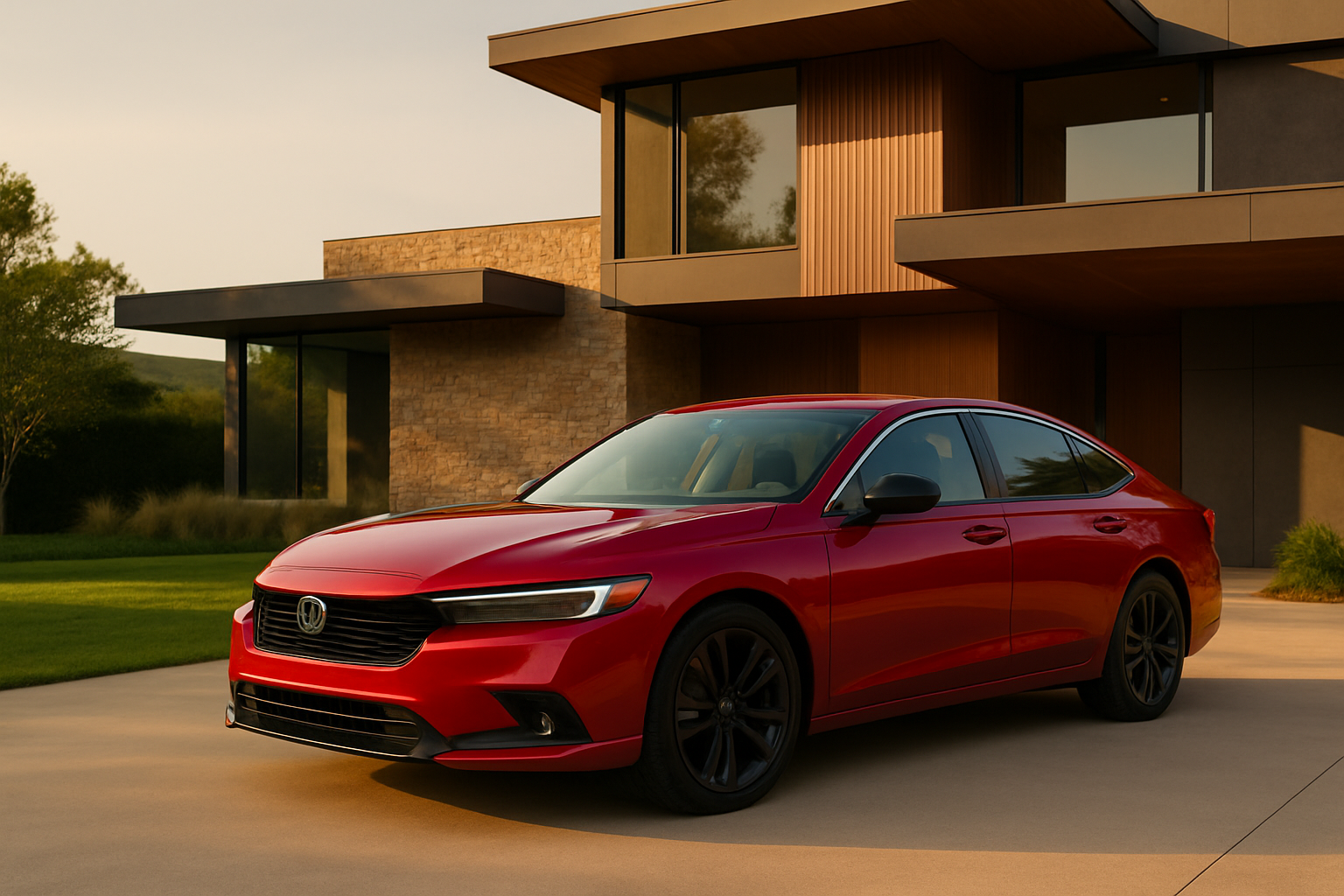
A plain-English look at Accord pricing, fuel costs, maintenance, and resale — and how to keep total ownership cost down.
| Starting MSRP | $28,395 |
|---|---|
| Top trim (Touring) | $39,495 |
| Combined MPG | Up to 48 (hybrid) |
| Basic warranty | 3 yr / 36,000 mi |
| Powertrain warranty | 5 yr / 60,000 mi |
| Complimentary maintenance | 1 yr / 12,000 mi |
Owning a Honda Accord is relatively affordable for a midsize sedan. Prices start at $28,395, hybrid trims return up to 48 mpg combined, and a strong reliability and resale reputation help keep long-term ownership costs down. Hybrid trims cost more up front but save the most on fuel for high-mileage drivers.
Accord pricing typically follows the usual midsize-sedan pattern: lower trims focus on value, core safety and convenience equipment, while mid-level trims add the features many owners use daily, such as larger infotainment screens, upgraded interior materials, enhanced driver-assistance content and comfort upgrades. Higher trims usually command the biggest premium because they combine the strongest feature set with the most desirable powertrain or hybrid configuration, so the best value is often found in the middle of the lineup rather than at the very top.
New Accord transaction prices can vary meaningfully by trim, powertrain, dealer inventory, regional demand and incentives. Hybrid-equipped versions generally cost more up front than comparable non-hybrid trims, but they can offset some of that premium over time through lower fuel consumption, especially for drivers who spend a lot of time in city and suburban traffic. Used Accord pricing is shaped heavily by model year, mileage, accident history, service records and trim; well-kept examples tend to hold value because the Accord has long-standing demand in the used midsize-sedan market.
Financing usually makes the most sense for shoppers who plan to keep the Accord beyond the loan term, drive higher annual mileage, or want the freedom to sell, trade or modify the vehicle without lease restrictions. A larger down payment, shorter term and strong credit profile can reduce total interest paid, though the monthly payment may be higher than a longer loan. Buyers should compare the total cost of the loan, not just the monthly figure, because a longer term can make the payment look easier while increasing interest exposure and the risk of owing more than the car is worth.
Leasing can be attractive for drivers who want a new Accord every few years, prefer warranty-period ownership and can stay within mileage and condition limits. Lease payments are often lower than finance payments on the same vehicle because the customer is paying mainly for depreciation during the lease term, plus fees and finance charges. The trade-off is that the lessee does not build equity, and excess mileage, wear charges or early termination costs can erase the apparent savings.
Fuel cost is one of the Accord’s stronger ownership arguments, particularly with hybrid versions. The non-hybrid models are generally efficient for a midsize sedan, while the hybrid models are usually the better fit for commuters who face stop-and-go driving. Drivers with mostly highway use may see a smaller gap between powertrains, so the decision should account for driving pattern, local fuel prices and how long the vehicle will be kept.
Insurance costs for the Accord tend to sit in the mainstream midsize-sedan range, but premiums vary by driver profile, location, coverage level, deductible, claims history and trim. More expensive trims can cost more to insure because replacement parts, sensors, wheels, lighting and interior components may be costlier. Shoppers comparing trims should request insurance quotes before purchase, especially if choosing a hybrid or a higher-content version with more advanced driver-assistance hardware.
Maintenance costs are generally one of the Accord’s ownership strengths. Routine service is straightforward for the segment, and Honda’s broad dealer network and parts availability help keep maintenance predictable. Owners should still budget for wear items such as tires, brakes, fluids, filters and batteries. Hybrid versions add hybrid-specific components, but they also may reduce brake wear in some driving because regenerative braking handles part of the deceleration.
The Accord’s reliability reputation is a major reason it remains a default choice in the midsize-sedan class. It has a long track record for durable powertrains, strong resale demand and practical long-term ownership. As with any vehicle, condition matters more than reputation on a used example: documented maintenance, clean title history, proper tire wear, smooth transmission behavior and no unresolved warning lights are more important than the badge alone.
For most shoppers, the ownership sweet spot is a well-equipped mid-trim Accord with the powertrain that matches daily use. Choose the hybrid if fuel savings and low-speed refinement matter most, or a non-hybrid version if purchase price and simpler up-front cost are the priorities. Before signing, compare the out-the-door price, finance or lease terms, insurance quote, expected fuel use and maintenance history so the Accord’s monthly cost reflects the full ownership picture rather than the payment alone.